Latest Releases
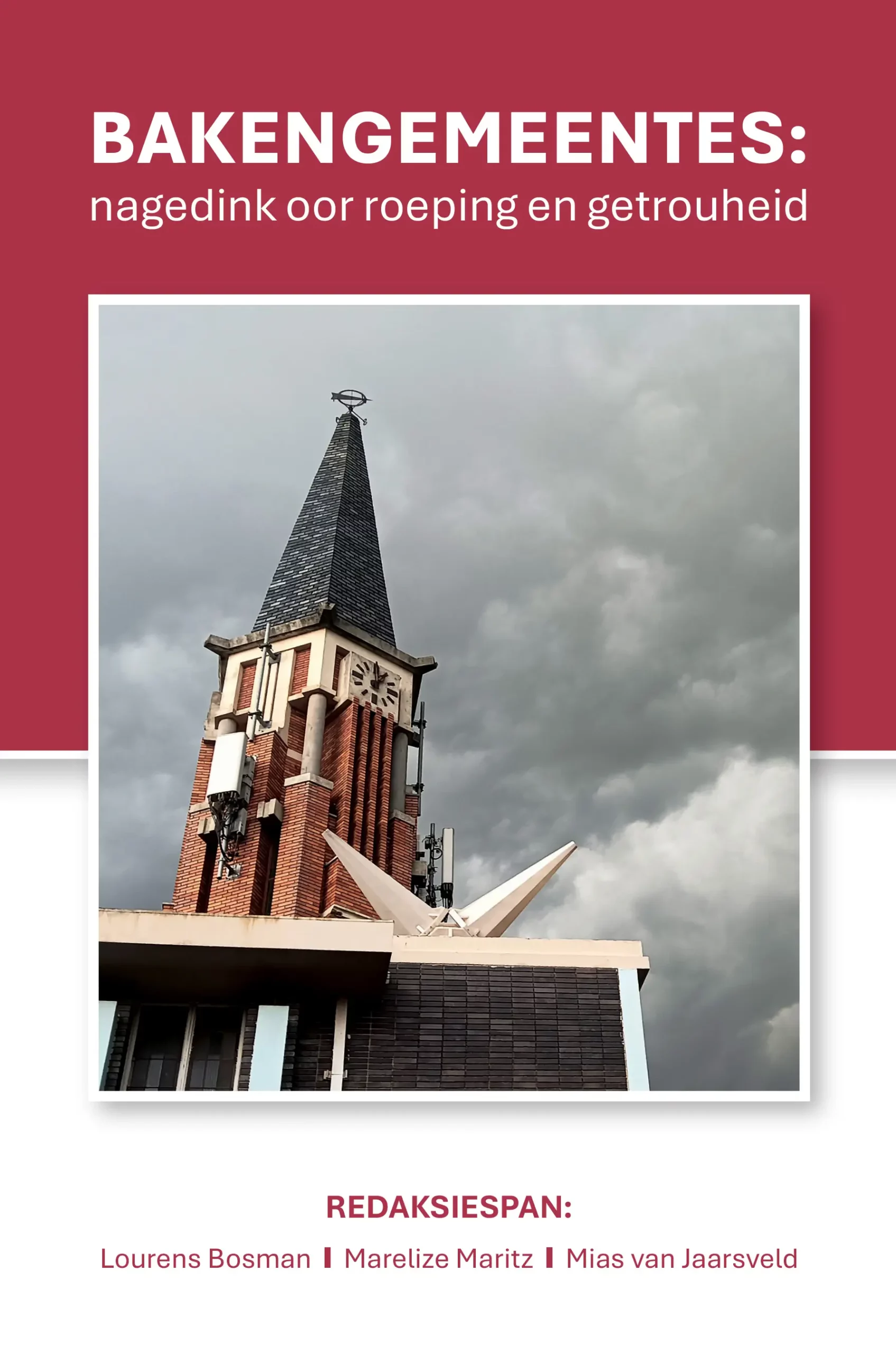
Bakengemeentes: Nagedink oor roeping en getrouheid
Bakengemeentes: Nagedink oor Roeping en Getrouheid is gebaseer op oorspronklike navorsing binne die NG Kerk en bied insig in hoe gemeentes aanpas by veranderende omstandighede. Die werk sluit kwalitatiewe en kwantitatiewe empiriese data in, versamel deur die NG Kerk se Algemene Taakspan Navorsing, en staan in gesprek met die 2030-droomscenario wat na afloop van die Algemene Sinode van 2019 geformuleer is.
Met verhale van 26 gemeentes, sowel as insigte uit die Kerkspieël- en Predikantepaneel-vraelyste, bied hierdie boek ’n ryk bron vir nadenke oor temas soos roeping, missionale leierskap, armoede en welwese, pastorale uitdagings en sosiale innovasie.
Hoewel gefokus op die NG Kerk, sal die inhoud van waarde wees vir studente en belangstellendes uit verskillende denominasies en akademiese dissiplines. Hierdie publikasie het ’n streng anonieme eweknie-beoordeling ondergaan en bied ’n unieke blik op die uitdagings en geleenthede van kerkwees in die hedendaagse samelewing.
Hierdie boek is ontwikkel in samewerking met Clairvaux Skrywershuis en die Algemene Taakspan Navorsing van die NG Kerk.
Lewedraende Kanale: Gemeentestrukturering
Lewedraende Kanale – Gemeentestrukturering is die derde deel in Prof. Malan Nel se invloedryke reeks oor Gemeentebou. Met diep teologiese insig en jare se praktiese ervaring in gemeentelike bediening, ondersoek hierdie akademiese teks hoe kerklike strukture lewensgewende kanale kan word wat die missie en identiteit van die gemeente dien.
Nel, emeritus-professor in Praktiese Teologie en Sendingstudies aan die Universiteit van Pretoria, beklemtoon dat strukture nooit ‘n doel op sigself is nie, maar dienende middele wat bruikbaar moet bly vir die kernroeping van die kerk. Hy stel ‘n teologies deurdagte argument: strukture behoort die kerk te help om Jesus Christus getrou te dien, bediening te fasiliteer, gemeenskap te bevorder, medelye te leef, aanbidding en die gawes van die Gees te ondersteun, kontekstueel relevant te wees, en dissipelskap moontlik te maak.

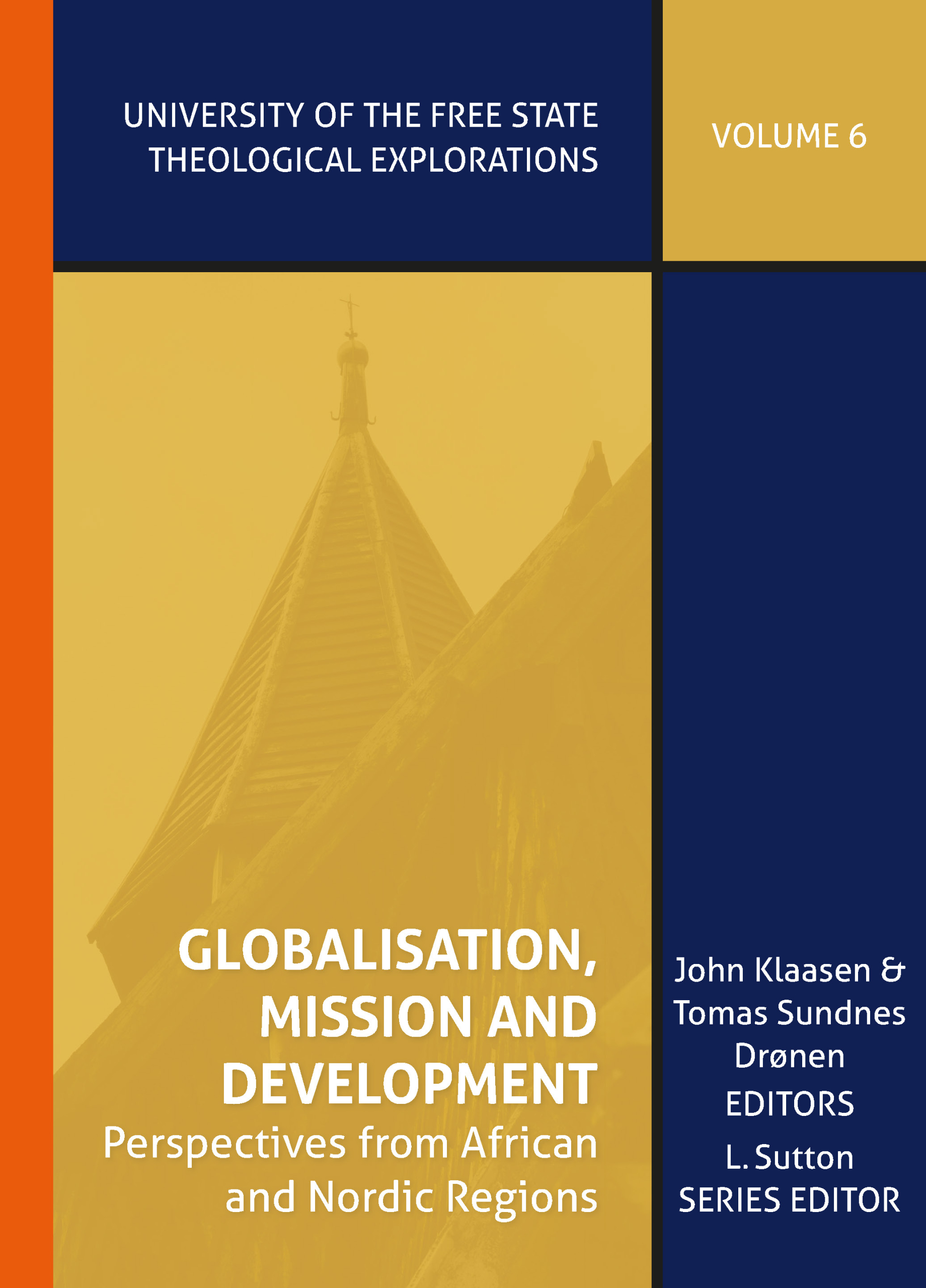
Globalization, Mission and Development: Perspectives from African and Nordic Regions
This book arises from a long-standing collaboration between institutions of higher learning in South Africa and Norway. In this volume numerous ideas, insights, and perspectives are shared on church mission and development. Research visits, sabbaticals, and institutional cooperation have offered valuable experiences and critical reflections that have enriched academic debate. This publication invited scholars from both countries to engage with the editors in exploring how mission and development, when viewed from diverse worldviews, need not be mutually exclusive or antagonistic.
Scholars from a range of disciplines across were encouraged to consider how scholarship from the two continents can contribute to a shared sense of humanity. This volume examines reflections on internationalisation through collaborative engagement, focusing on the intersection and interaction of mission and development.
Series Editor: L. Sutton
Editors: John Klaasen, University of the Free State; Tomas Sundnes Drønen, VID Specialized University
Youth Ministry After the Pandemic: A Practical Theology From the Global South
Youth faith formation usually takes the form of a narrow privatized or spiritualized perspective. Since young people are a critical demographic in the Global South, and Africa more specifically, their faith formation must shape them to engage public life so as to enhance human flourishing. While much of the literature on youth and theology is Western in orientation, this book makes use of scholarly sources in African and Global Christianity so as to shape youth work in the Global South. It shows that young people can help guide the African church to fulfill both the Great Commission and the Great Commandment and so achieve its spiritual and prophetic mandate. It engages with youth culture, emerging non-religious identities, digital church or ecclesiology, ecotheology and climate change, and economic justice.
Author: Kevin Muriithi Ndereba (PhD, University of South Africa) is a lecturer and Head of Department, Practical Theology at St. Paul’s University, Kenya, and Research Fellow in the Department of Practical Theology and Missiology at Stellenbosch University. He is the editor of Apologetics in Africa: An Introduction and serves on the executive board of the International Association for the Study of Youth Ministry. He is also a Minister in the Presbyterian Church of East Africa.
Practical Theology and Empirical Research: Perspectives from an African Context
The empirical research that is the focus of this volume aims to critically reflect on the role of congregations and their leadership in the community through a discussion that offers new perspectives, with specific reference to the South African context, to enhance the field of congregational studies. The aim is to be significant, transformational, and relevant to the context and its challenges in developing contextual ecclesiologies within congregational studies. The contributions to this volume have a specific empirical and methodological aim: to map markers for conducting empirical research within the Mangaung Metropolitan Municipality. The research question in this volume is: In conducting practical theology and empirical research within an African context, what methodological markers can be identified for this context?
The research is grounded in the field of “Congregational studies and leadership”. The academic endeavours of practical theology and the department over the last decade have developed towards a more hermeneutical discipline, emphasising context and working inductively. A hermeneutical approach profoundly impacts the understanding and practice of engaged scholarship. The research is strongly inclined towards a hermeneutical and inductive approach and takes the local context seriously.
This research project aims to critically describe and evaluate, from a contextual and practical theological perspective, the role of township congregations as faith communities within their communities and broader society. The focus is also on practice-orientated research as a framework for empirical research; in this instance, a multi-cultural congregation and congregation within a context of poverty are also analysed from an empirical perspective. The empirical research is conducted using quantitative and qualitative methodologies.
Editors: Prof. K.J. (Joseph) Pali and Prof. W.J. (Kobus) Schoeman
Family well-being and Paternal Absence in South African society: Addressing the Anti-Fatherhood Sentiment through a Biblical Lens
Father absence extends beyond individual households, emerging as a societal concern with far-reaching consequences. It contributes to emotional and behavioural difficulties in children, as well as broader economic and social repercussions. This book seeks to illuminate these challenges, inspire transformation, and promote healing for those affected. Addressing this complex issue requires compassion, understanding, and action – ultimately fostering stronger families and a healthier society. We are recipients of God’s sacred title, Father. Therefore, every family and community must understand what it means to be a godly father. Godly fathers and mothers serve as pillars of society, leading by example and fostering transformation in the well-being and restoration of families. The renewal of communities, families, societies, and civilisation is directly linked to family well-being. The truth is that God created men to reflect His nature within families. It is imperative to instruct, prepare, empower, and develop fathers so that they sincerely strive to bring God into their homes, thereby enhancing the success of their families.
Author: Fazel Ebrihiam Freeks
![Family well-being and Paternal Absence in South African society. Addressing the Anti-Fatherhood Sentiment through a Biblical Lens [1]](https://gomagcdn.ro/domains/editurauniversitara.ro/files/product/large/family-wel-being-and-paternal-absence-in-south-african-society-addressing-the-anti-fatherhood-sentiment-through-a-biblical-lens-932018.jpg)
Family, School and Community in the Pluriverse of Current Education
In a world marked by increasing interconnectedness and complex cultural dynamics, the spheres of family, school, and community no longer function in isolation. Instead, they form rich, overlapping dimensions that reflect and influence educational practice and theory. This volume, Family, School and Community in the Pluriverse of Current Education, edited by Lavinia Nădrag, Fazel Ebrihiam Freeks, Cosmin Ciocan and Alina Buzarna-Tihenea (Gălbează), emerges from that intersection, offering a collection of perspectives that challenge monolithic understandings of education and open space for a truly pluriversal dialogue. The idea of the “pluriverse” — a term that signals the coexistence of multiple, equally valid ways of knowing and being — is more than a conceptual anchor for this book; it is a call to educators, researchers, and practitioners to engage with diversity not as an obstacle, but as a resource. This book brings together scholars from across continents — Europe, Africa, and America — each offering grounded insights drawn from their local realities and academic investigations. Whether through empirical studies, theoretical reflections, or case-based explorations, the chapters presented here illustrate the dynamic interplay between tradition and transformation in contemporary education. From personality traits that influence teaching style, to the role of digital parenting, faith-based perspectives on inclusion, or critiques of institutional schooling, the diversity of topics underscores a shared commitment to rethinking education for the 21st century.
Editors: Lavinia Nădrag, Fazel Ebrihiam Freeks, Cosmin Ciocan and Alina Buzarna-Tihenea (Gălbează)
![Family, school and community in the pluriverse of current education - ebook [1]](https://gomagcdn.ro/domains/editurauniversitara.ro/files/product/large/family-school-and-community-in-the-pluriverse-of-current-education-ebook-756232.jpg)
The Spiritual Practices of South African Clergy
Clergy play an important role in the spiritual wellbeing of their congregation. They are entrusted by the Great Shepherd to shepherd his flock which entails leading them to green pastures and still waters, for example, pastoral care, and defending them from predatory animals, for example, heresy. However, clergy are sheep before they are shepherds and are also in need of the green pastures and still waters of meditation, prayer, fasting, and Bible study. These are known as inward spiritual disciplines (exercises) and have been practiced for centuries. Spiritual Practices of South African Clergy: State of the Clergy discusses these inward spiritual disciplines’ mental, physical, spiritual and social benefits. The volume explores how clergy from five diverse denominations practice these specific inward spiritual disciplines. They include the Methodist, Netherdutch, Pentecostal, Presbyterian, and Roman Catholic faith traditions. This book focuses on clergy in the Global South and how they practice these spiritual disciplines within their context. Clergy, congregants, academics and lay-persons alike will benefit from the research conducted.
Editor: Shaun Joynt
Contributors: Annelie Botha; Graham A. Duncan; Anthony Egan; Shaun Joynt; Marius Nel and Derek L. Oppenshaw
Glocal Theological Education: Teaching and Learning Theology in the Light of Crisis
This book presents a vision for Glocal Theological Education, an invitation to rethink and reshape theological training in times of crisis. The aim is to train theological judicium, the ability to exercise sound judgment and practice discernment in the face of the different crises in the world of today–like the climate crisis, the changed role of the church, and the challenge of youth citizenship. It explores what has been learned from developing shared, global learning within the framework of local learning communities in Norway, South Africa, and beyond. The book also discusses key practices, such as the combination of coteaching online and learning in local contexts, and best-practice research on other educational activities. Contributors also reflect more theoretically on where, how, and what we can learn from crisis, and how these theoretical insights can help us shape theological leaders for the future who can read the times.
International Handbook of Practical Theology
The International Handbook of Practical Theology was published in September 2022. In a globalized world, the perception and description of religion has become a complex challenge. How to talk and think about cultures and religions is a sensitive question. Methodologically, instead of dealing with top-down-definitions, the aim of the Handbook was to develop sensitive transcultural concepts of religion and religious matters methodically collected in different cultures and among different religions. The Handbook follows a concept of Practical Theology that understands Practical Theology as an empirically founded and hermeneutically reflected theory of “lived religion”. According to this concept, what is understood as “lived religion” depends on the different culturally situated discourses on and about religion. With its transcultural and trans-religious approach or methodology, the Handbook intents to promote the praxis of Practical Theology by reflecting and conceptualising the very different challenges of religious practices as they react on and interact with their very different religious and cultural circumstances and conditions. In this regard the methodology can also be described as postcolonial in nature. Three of the editors and three of the contributors to the Handbook will by means of a panel discussion present this new resource in the field of Practical Theology. After general background presented by the editors, one author who contributed a chapter to each one of the three parts of the Handbook will, based on their contributions, illustrate how they gave form to the concept of the Handbook.